Tracing How Update Cycles in Software Platforms Alter Access Patterns to Daily and Weekly Prize Opportunities
Parker Flores · Jul 28, 2026
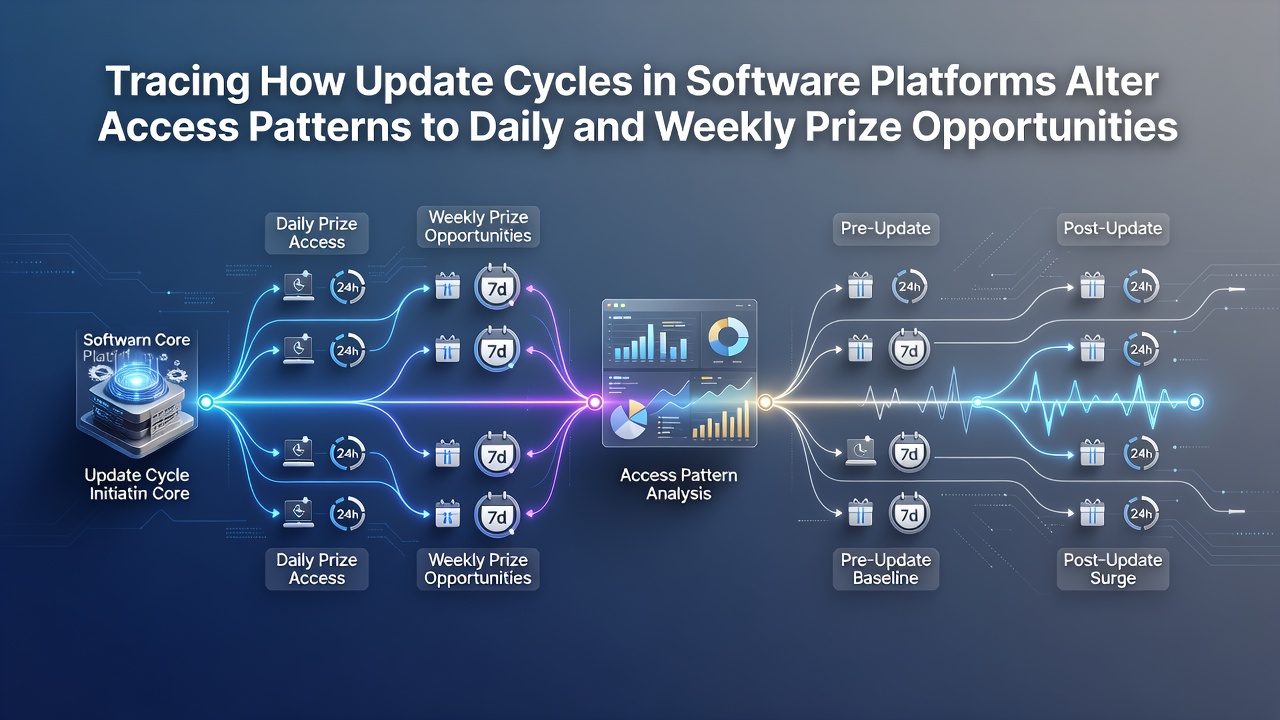
Tracing How Update Cycles in Software Platforms Alter Access Patterns to Daily and Weekly Prize Opportunities
Software platforms hosting daily and weekly prize opportunities undergo regular update cycles that modify user interfaces, notification systems, and entry mechanisms, which in turn shifts how participants locate and submit entries over time. These cycles typically occur every few weeks or months depending on the platform's development roadmap, and data from industry reports shows that access patterns adjust noticeably within days of deployment. Researchers tracking participation metrics have documented drops in daily entries immediately following major updates, followed by gradual recovery as users adapt to new layouts and features.
Platform Update Mechanisms and Their Reach
Update cycles begin with backend changes that roll out through app stores or web deployments, and they often include redesigned dashboards where daily prize listings appear alongside weekly contest calendars. Observers note that when platforms introduce new navigation menus or search filters during these updates, users who previously relied on familiar paths spend additional time locating opportunities, which reduces the frequency of submissions in the first 48 to 72 hours. Studies conducted across multiple regions indicate that mobile users experience these disruptions more acutely than desktop participants because app updates require explicit downloads and restarts before full functionality returns.
Notification systems also transform during cycles, with push alerts for new daily draws sometimes delayed or rerouted to different sections of the interface. Figures from regulatory monitoring reveal that in July 2026 several major platforms synchronized their update schedules with seasonal promotion launches, resulting in temporary mismatches between announced deadlines and visible entry buttons for participants across time zones. Those who monitor participation logs find that weekly contest access patterns stabilize faster than daily ones because the longer intervals allow more time for support documentation and tutorial videos to circulate among users.
Observed Shifts in Entry Behaviors
Access patterns evolve through distinct phases after each cycle completes. Initial confusion gives way to experimentation as participants test revised forms and filters, and data indicates that successful adapters often consolidate their activity into fewer sessions per day once they master the updated workflows. European Commission analyses of digital service accessibility highlight how interface simplifications during updates can either broaden or narrow participation depending on whether legacy browser support remains intact. Meanwhile, Canadian Competition Bureau documentation on online promotions records cases where mandatory account re-verification steps introduced mid-cycle caused temporary exclusion of users whose profiles had not been refreshed recently.
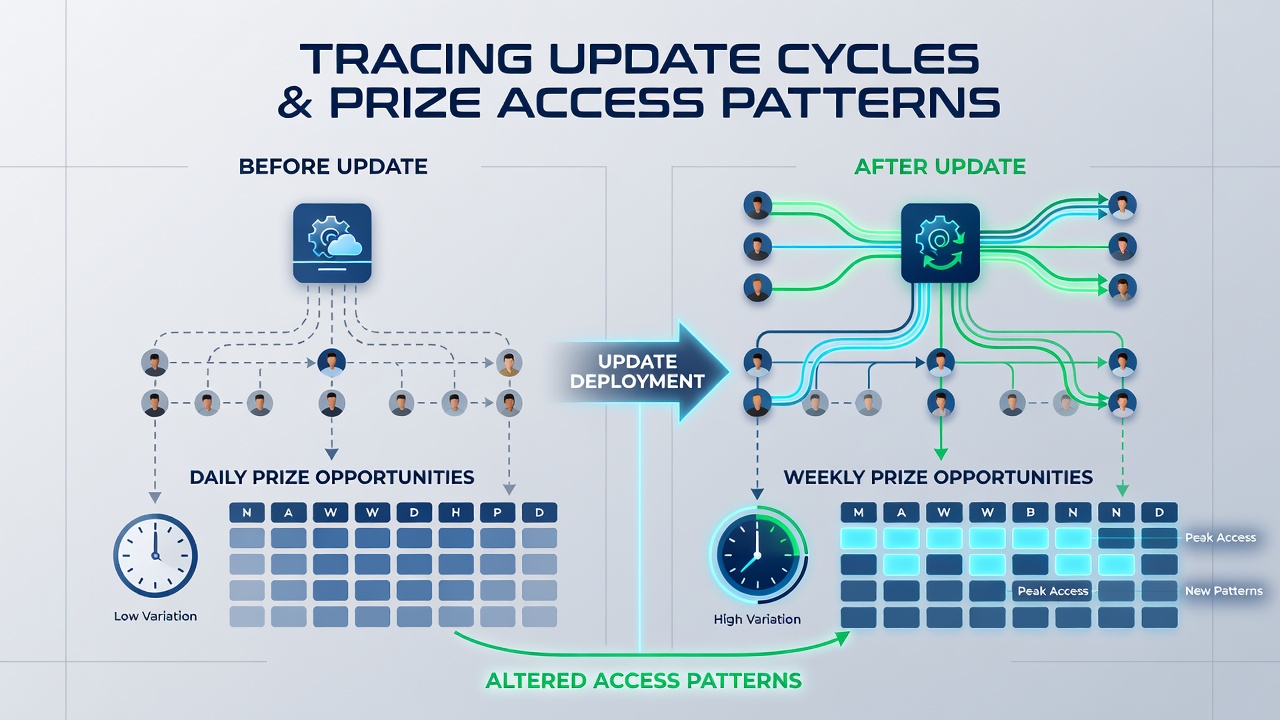
Multi-device users frequently report that tablet and smartphone interfaces diverge after updates, prompting some to favor one platform version over another for specific prize types. Academic research from institutions tracking user behavior demonstrates that platforms releasing incremental patches every two weeks maintain steadier daily entry rates compared with those deploying large quarterly overhauls. The difference appears in retention curves where smaller updates preserve muscle memory for navigation while larger ones force complete relearning of entry sequences.
Regional Variations and Compliance Factors
Geographic differences emerge because regulatory frameworks require platforms to align updates with local contest rules. In Australia the Australian Competition and Consumer Commission guidelines influence how disclosure sections relocate during redesigns, which affects how quickly international entrants discover eligibility confirmations. Platforms serving cross-border audiences must therefore sequence updates to avoid simultaneous changes that could violate staggered regional deadlines for daily and weekly draws. Observers tracking these patterns note that compliance adjustments often coincide with technical releases, creating compound effects on access timing.
Device compatibility checks integrated into update processes further segment user groups. Older operating systems sometimes lose support, which forces participants to either upgrade hardware or migrate to web versions where daily prize visibility may differ. Industry reports compiled by trade associations show that such migrations spike in the week following major platform updates, and the resulting traffic shifts alter server load patterns for prize submission endpoints.
Longer-Term Pattern Stabilization
Over successive cycles platforms accumulate data on which interface elements correlate with sustained entry volumes, and they refine subsequent releases accordingly. Participants who maintain consistent profiles across updates encounter fewer interruptions because saved preferences transfer more reliably when fields remain unchanged. Research indicates that those who regularly review platform changelogs experience smoother transitions, as they anticipate where relocated features will appear. The cumulative effect produces access patterns that become more resilient to future cycles as user bases develop collective knowledge of common redesign tendencies.
Conclusion
Update cycles in software platforms continuously reshape the pathways participants follow to reach daily and weekly prize opportunities, with measurable impacts on timing, device preferences, and overall submission frequency. Evidence from multiple regulatory and research sources demonstrates that these alterations follow predictable phases of disruption and adaptation, modulated by regional compliance requirements and technical constraints. As platforms refine their deployment strategies, access patterns evolve in response, creating an ongoing dynamic between software maintenance schedules and participant behavior across global networks.