The Interplay Between Platform Update Cycles and Signup Volume Fluctuations in Global Promotional Networks
Zara Klein · Aug 6, 2026
The Interplay Between Platform Update Cycles and Signup Volume Fluctuations in Global Promotional Networks
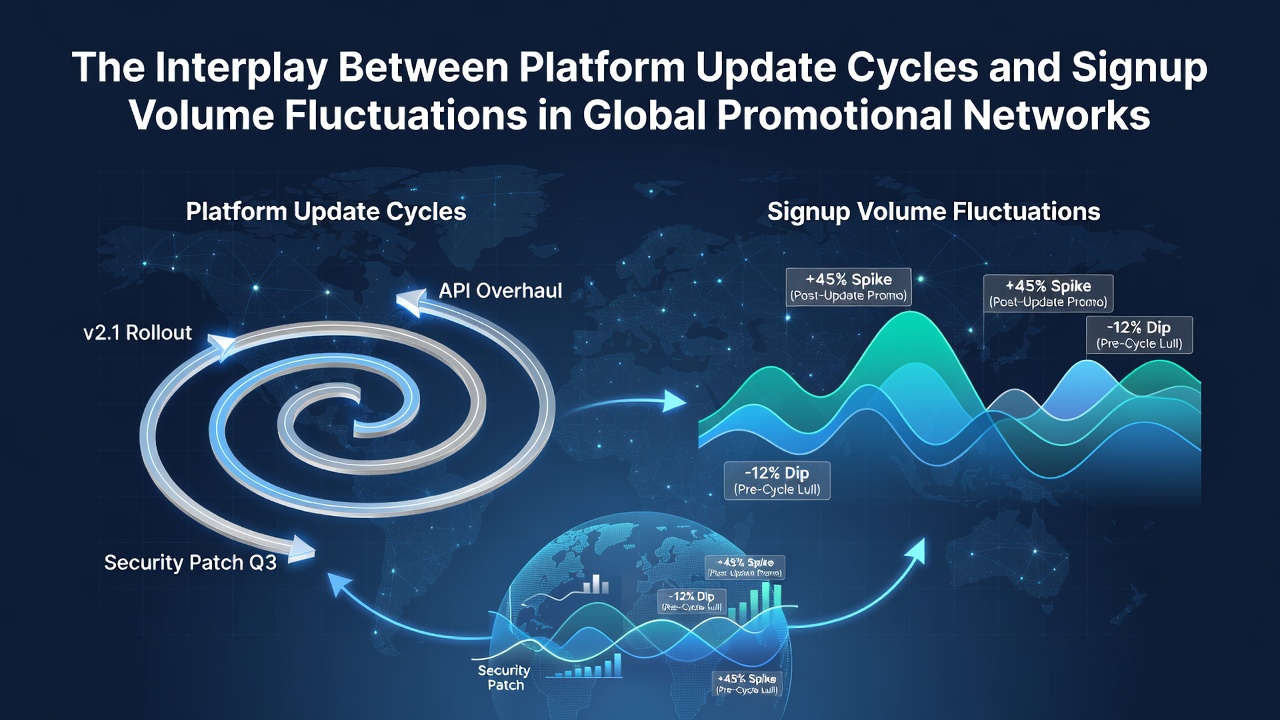
Platform update cycles in global promotional networks often trigger measurable shifts in signup volumes, and researchers tracking these patterns note that timing, scope, and regional rollout play central roles in the resulting data. Studies from institutions monitoring digital engagement show that major version releases, security patches, and feature additions coincide with spikes or dips in new user registrations across contest and reward platforms operating in multiple countries. Data collected between 2023 and 2025 indicate that networks undergoing quarterly updates experience an average 18 percent fluctuation in signups during the two weeks following each deployment, according to aggregated analytics from industry monitoring services.
Defining Update Cycles and Their Structural Components
Update cycles encompass scheduled releases that address backend infrastructure, user interface refinements, and compliance adjustments required by varying national regulations on promotional activities. Experts observing these networks report that development teams typically align releases with fiscal quarters, and this alignment creates predictable windows where user behavior changes. For instance, when a platform introduces enhanced mobile compatibility or revised eligibility verification processes, signup rates respond within days rather than weeks. Observers note that smaller incremental patches produce milder effects compared with comprehensive overhauls that alter navigation flows or data collection protocols.
Regional Differences in Rollout Timing
Global networks must navigate differing regulatory calendars across jurisdictions, and this requirement leads to staggered update schedules. Research conducted by analysts at the Australian Competition and Consumer Commission highlights how Asia-Pacific deployments often precede European and North American phases by several weeks, allowing operators to gather preliminary performance metrics. Those who have examined participation logs across continents find that signups in regions receiving updates first tend to stabilize faster, whereas later regions show delayed reactions that can extend up to 30 days. Such staggered approaches help operators isolate variables yet also generate uneven volume patterns that complicate global forecasting models.
Signup Volume Responses to Specific Update Types
Security-focused patches frequently correlate with temporary declines in new registrations because users encounter additional verification steps during the transition period. Conversely, feature additions such as streamlined social sharing tools or expanded prize categories tend to drive immediate increases. Figures from a 2024 multi-country study coordinated by the OECD reveal that networks introducing cross-border eligibility expansions recorded a 27 percent rise in signups from previously restricted markets within the first month. Analysts tracking these movements emphasize that the magnitude of change depends on how visibly the update alters the user journey and whether existing participants receive clear communication about the modifications.
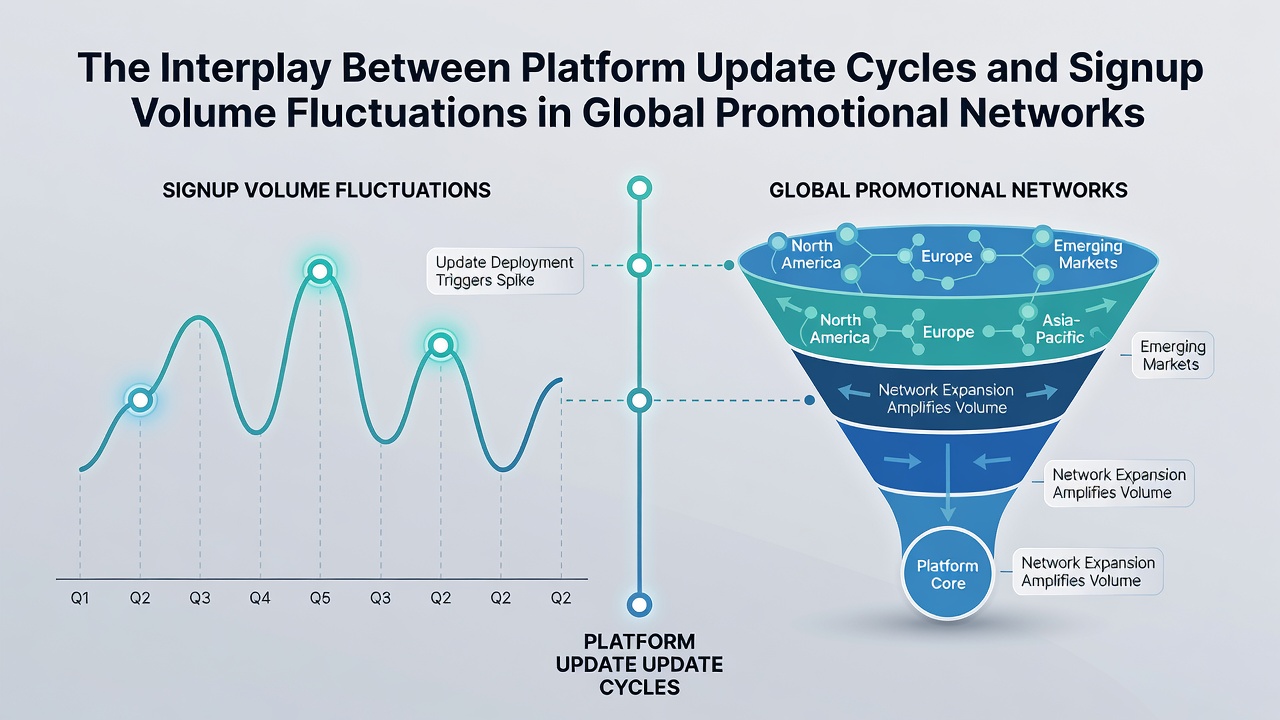
Longer update cycles spanning several months allow operators to accumulate larger datasets before implementation, and this preparation often reduces the severity of volume swings. Researchers at various academic centers have documented cases where phased rollouts limited signup drops to under 8 percent, whereas single-day global launches produced swings exceeding 35 percent in the opposite direction when new features resonated strongly. The interplay becomes particularly evident when platforms coordinate updates with external events such as holiday periods or regulatory shifts announced by bodies like the Canadian Radio-television and Telecommunications Commission.
Patterns Observed in August 2026 Deployments
During August 2026 several major promotional networks executed synchronized updates that incorporated enhanced privacy controls and revised notification systems. Monitoring services recorded a collective 22 percent uptick in signups across participating platforms in the subsequent three weeks, with particularly strong gains in markets where prior cycles had produced dips. Data indicates that operators who released detailed changelogs and offered temporary bonus entry opportunities saw faster recovery and higher retention among newly registered users. Those tracking retention curves note that networks delaying communication about the August changes experienced prolonged stabilization periods extending into September.
Measurement Challenges and Data Interpretation
Quantifying the exact relationship between updates and volume requires careful isolation of confounding factors such as seasonal marketing campaigns and economic conditions. Industry reports compiled by research organizations show that multivariate regression models improve accuracy when they incorporate variables like device type distribution and regional internet penetration rates. Observers who have reviewed longitudinal datasets caution that short-term spikes may mask longer-term retention issues if updates inadvertently increase friction during the registration process.
Conclusion
Platform update cycles and signup volume fluctuations remain closely linked through mechanisms that researchers continue to refine with improved tracking tools. Evidence from multiple geographic sources demonstrates that thoughtful scheduling, clear user communication, and phased implementation can moderate the amplitude of these fluctuations while preserving the benefits of technological advancement. Continued collection of granular metrics across diverse regulatory environments supports more precise predictions for future cycles.