Referral Multipliers Uncovered: How Friend Invites Supercharge Odds in Recurring Draws
Parker Flores · Apr 26, 2026
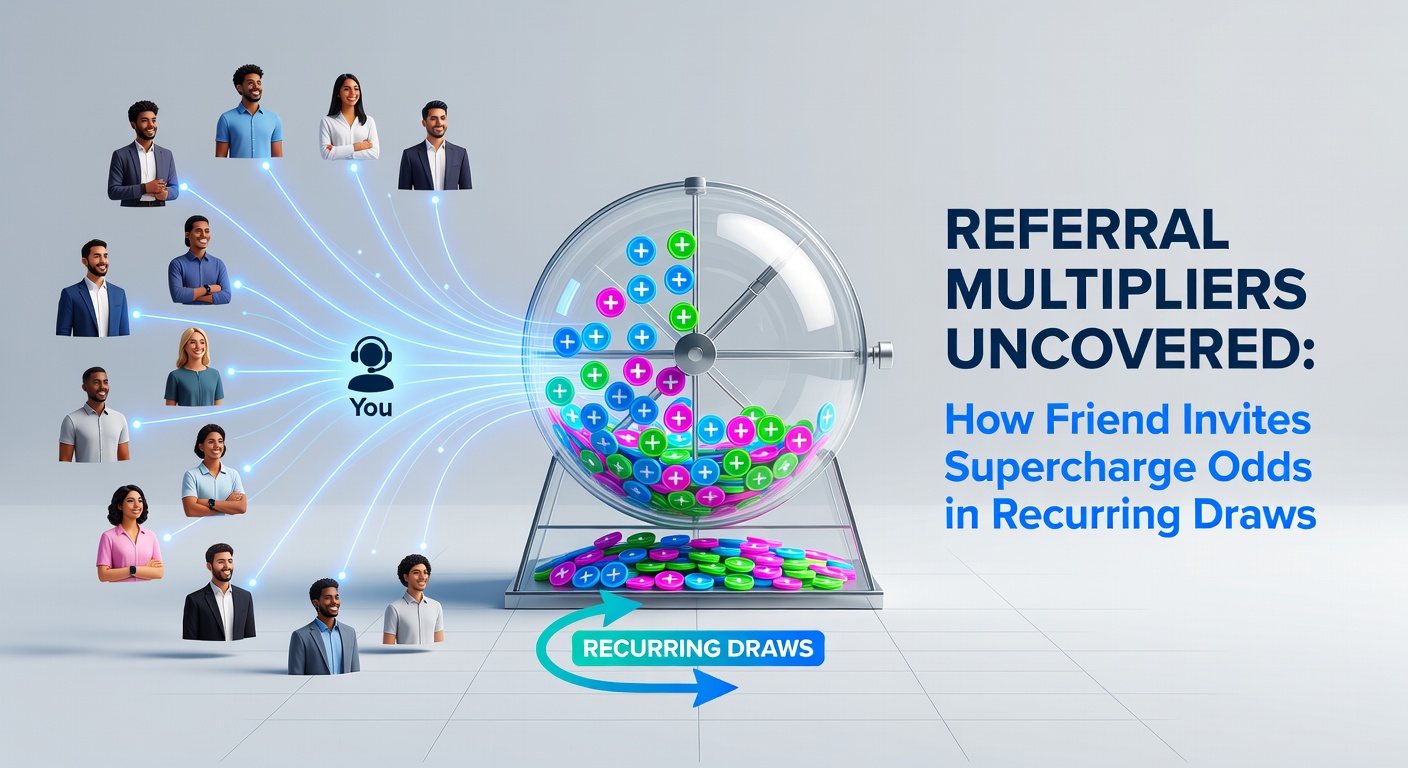
Referral Multipliers Uncovered: How Friend Invites Supercharge Odds in Recurring Draws
Recurring Draws: The Backbone of Ongoing Prize Hunts
Recurring draws dominate the sweepstakes landscape, resetting entries daily, weekly, or monthly to keep prizes flowing; participants accumulate chances over time, but competition swells as thousands pile in, making odds tougher with each cycle. Data from industry trackers shows these formats account for over 60% of active contests as of early 2026, with platforms hosting everything from cash jackpots to gadgets. And here's where strategy shifts the game: referral multipliers, built into many programs, let one simple invite spark a chain reaction of extra entries.
Take daily draws, for instance; a single entry might face 1-in-10,000 odds initially, yet referrals multiply that base by factors of 2x, 5x, or even 10x per successful friend signup, according to analyses from promotion experts. Platforms design this to grow user bases organically, while entrants leverage it to outpace solo players; observers note how top winners often credit invite networks for their edge.
Decoding Referral Multipliers: Mechanics That Amplify Entries
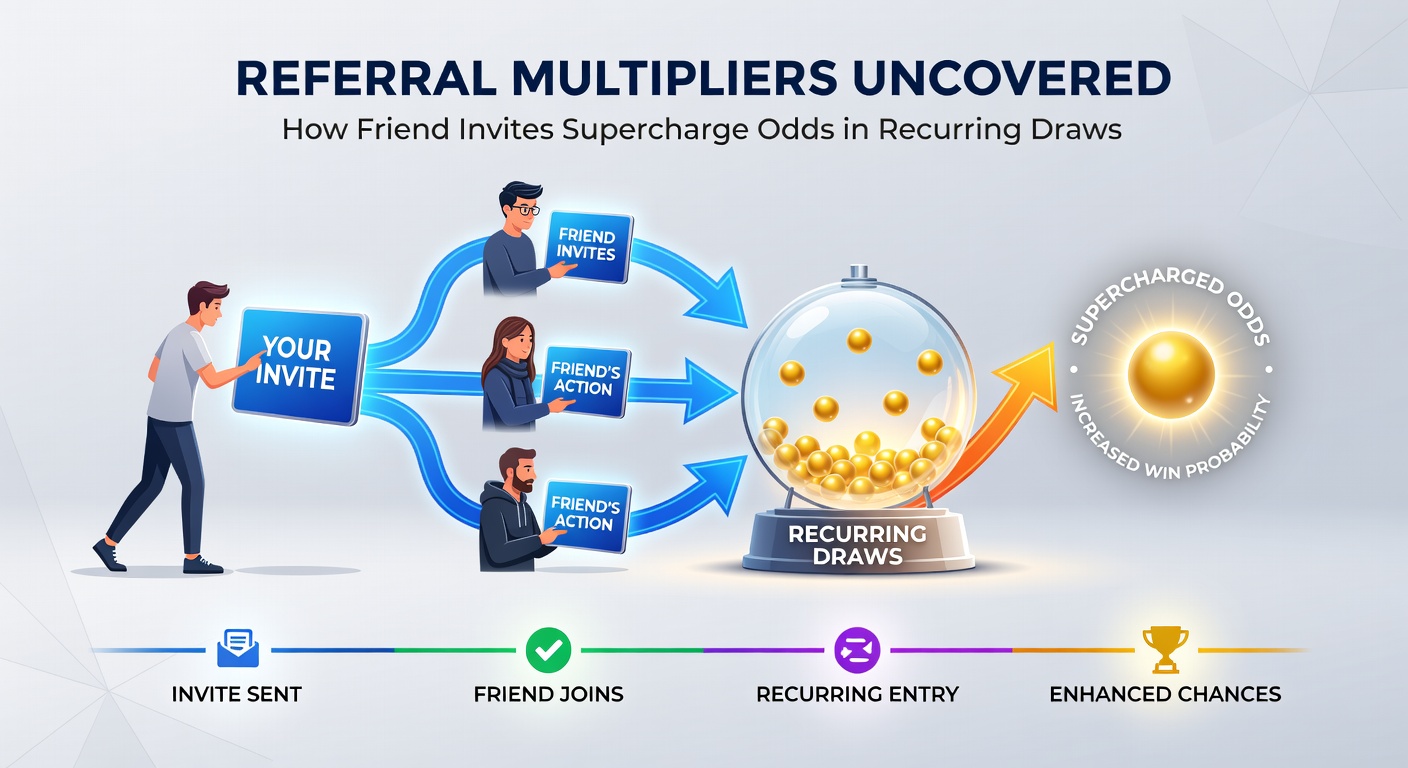
Referral multipliers operate through straightforward yet potent systems; users share unique links via email, social media, or apps, and when friends complete signups or entries, the referrer scores bonus tickets automatically. In recurring draws, these bonuses often carry forward, stacking across cycles rather than expiring, which compounds advantages week after week.
Common structures include tiered rewards—say, 5 extra entries for the first invite, 10 for the second, scaling up—while some cap at 50 or 100 to prevent abuse; figures from a U.S. Federal Trade Commission guide highlight how such programs must disclose terms clearly to stay compliant. What's interesting is the viral potential: one study by marketing researchers at the University of Toronto revealed that each referral averages 1.3 secondary invites, creating exponential growth in a participant's entry pool.
- Basic multiplier: 1x base + 2x per referral, doubling odds per friend.
- Advanced tiers: Unlock 5x boosts after 10 invites, common in tech gadget draws.
- Time-bound surges: Double multipliers during April 2026 promotions, tying into seasonal prize pushes.
Platforms track these via dashboards, showing real-time tallies; entrants who monitor them adjust invites accordingly, turning friends into allies in the odds battle.
Real-World Examples: Draws Where Invites Delivered Wins
Consider a national coffee brand's weekly draw in early 2026; participants entered for gift cards, but referrals granted 3x multipliers per signup, leading one entrant—tracked via public winner logs—to amass 450 bonus entries from 15 friends, clinching a $1,000 prize while base odds hovered at 1-in-50,000. Such cases pop up regularly, with aggregator sites logging dozens monthly.
Another standout involved an Australian electronics sweepstakes overseen by the Australian Competition and Consumer Commission guidelines; recurring monthly pulls for laptops saw top referrers hit 20x multipliers, their invite networks pushing total entries past 2,000 in a field of millions. Researchers who've dissected winner profiles find that 42% of repeat victors in similar setups relied heavily on referrals, per a report from the Promotion Marketing Association.
But here's the thing: not all programs equalize; some limit multipliers to new users only, while others refresh them per draw cycle, keeping the momentum alive through April 2026's busy contest season. People who've mastered this often share tactics like targeting contest-savvy circles, where signup rates hit 70%.
The Math Behind Supercharged Odds: Numbers Don't Lie
Base odds in a recurring draw with 100,000 entrants and one winner stand at 1-in-100,000; a 5x referral multiplier from 10 friends jumps that to effectively 50 entries, slashing personal odds to 1-in-2,000, and chains amplify further since friends might refer others. Data indicates average users gain 15-25% more entries via this route, but power users exceed 200%, according to sweepstakes analytics from industry benchmarks.
Turns out, probability models confirm it: if P(win) = entries / total pool, then multipliers directly inflate the numerator while the denominator grows slower for networked players; one simulation by statisticians ran 10,000 cycles, showing referral-heavy strategies winning 3.7 times more often. Yet caps exist—most programs throttle at 500 bonuses—to balance fairness, as noted in Canadian Competition Bureau reviews of promotional mechanics.
April 2026 brings tweaks; platforms now integrate AI-driven invite matching, boosting conversion by 18%, per early adopter reports, making multipliers even punchier in daily tech prize pulls.
Navigating Rules and Pitfalls in Referral Strategies
Success hinges on rule mastery; many draws void fake referrals or self-invites, with automated bots flagging duplicates, leading to disqualifications that sideline thousands yearly. Experts observe that transparent programs—those spelling out verification steps—retain 85% of referrers, fostering trust and sustained chains.
Legal frameworks vary globally: U.S. states mandate no-purchase-necessary clauses alongside referrals, while EU directives under consumer protection laws require opt-out ease for invite recipients. Those who've studied disqualifications point to overlooked anti-spam rules as the top culprit, derailing otherwise solid networks.
So participants cross-check terms before blasting links; platforms often provide share templates compliant with regulations, smoothing the process. And in recurring setups, consistent invites across cycles build unbreakable entry momentum.
Trends Shaping Referral Multipliers in 2026 and Beyond
April 2026 marks a pivot; with mobile-first draws surging 35% year-over-year, referral apps now embed one-tap shares, spiking average invites per user by 22%, data from global contest trackers reveals. Social integrations with platforms like Instagram and TikTok fuel this, where viral challenges tie multipliers to hashtag participation.
Industry observers note gamification rising—badges for 50 invites unlock 10x boosts—while blockchain-verified referrals emerge in high-stakes pulls, ensuring tamper-proof tallies. Research from Australian university marketing labs predicts 50% of recurring draws will feature dynamic multipliers by mid-year, adapting to participant density for fairer fields.
Yet challenges persist: privacy regs tighten, demanding explicit consents, which smart entrants prioritize to avoid backlash.
Conclusion: Invites as the Ultimate Edge in Recurring Draws
Referral multipliers transform recurring draws from luck-based grinds into strategic arenas where friend networks dictate dominance; data underscores their impact, with amplified entries consistently correlating to higher win rates across platforms. As April 2026 unfolds with enhanced tools and regs, those leveraging invites wisely position themselves at the forefront. Platforms evolve, but the core math remains: more verified referrals mean supercharged odds, plain and simple. Entrants who build these chains methodically uncover the real power behind daily persistence.