How Notification Timing Variations Reshape Repeat Involvement Patterns Across International Reward Platforms
Parker Flores · Jun 21, 2026
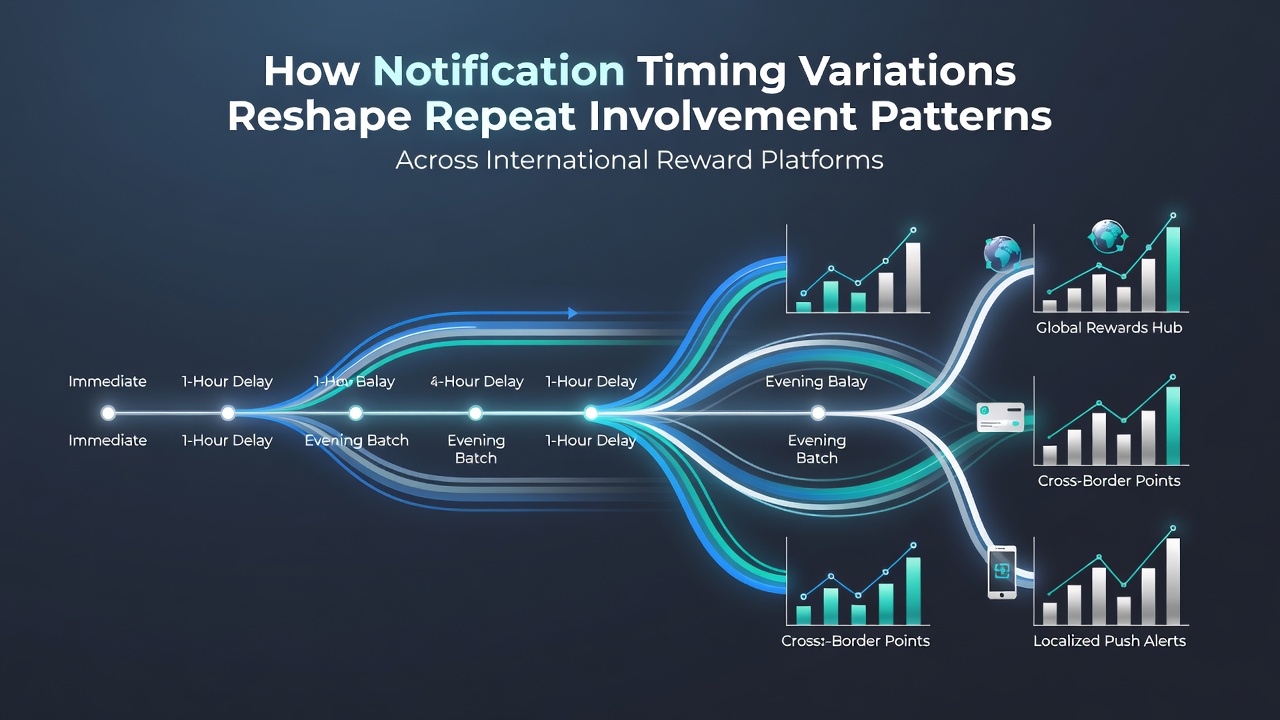
How Notification Timing Variations Reshape Repeat Involvement Patterns Across International Reward Platforms
Notification timing on international reward platforms influences how participants return for subsequent entries, and researchers tracking these systems have documented measurable shifts in repeat involvement when alerts arrive at different intervals. Platforms operating across borders send winner announcements, entry confirmations, and promotional updates at varying speeds, from instant pushes to delays spanning several hours or days, and these differences correlate with changes in user return rates according to aggregated platform data.
Core Mechanics of Timing Variations
Reward platforms use algorithms that determine when notifications reach users, factoring in server loads, regional regulations, and campaign structures. Some systems deliver results within minutes of a draw closing, while others batch announcements for specific windows such as morning hours in the user's local time zone. Data from multi-region operators shows that immediate notifications often coincide with higher initial click-through rates, yet sustained repeat participation depends on how those alerts align with users' daily routines across different countries.
Patterns in Repeat Involvement
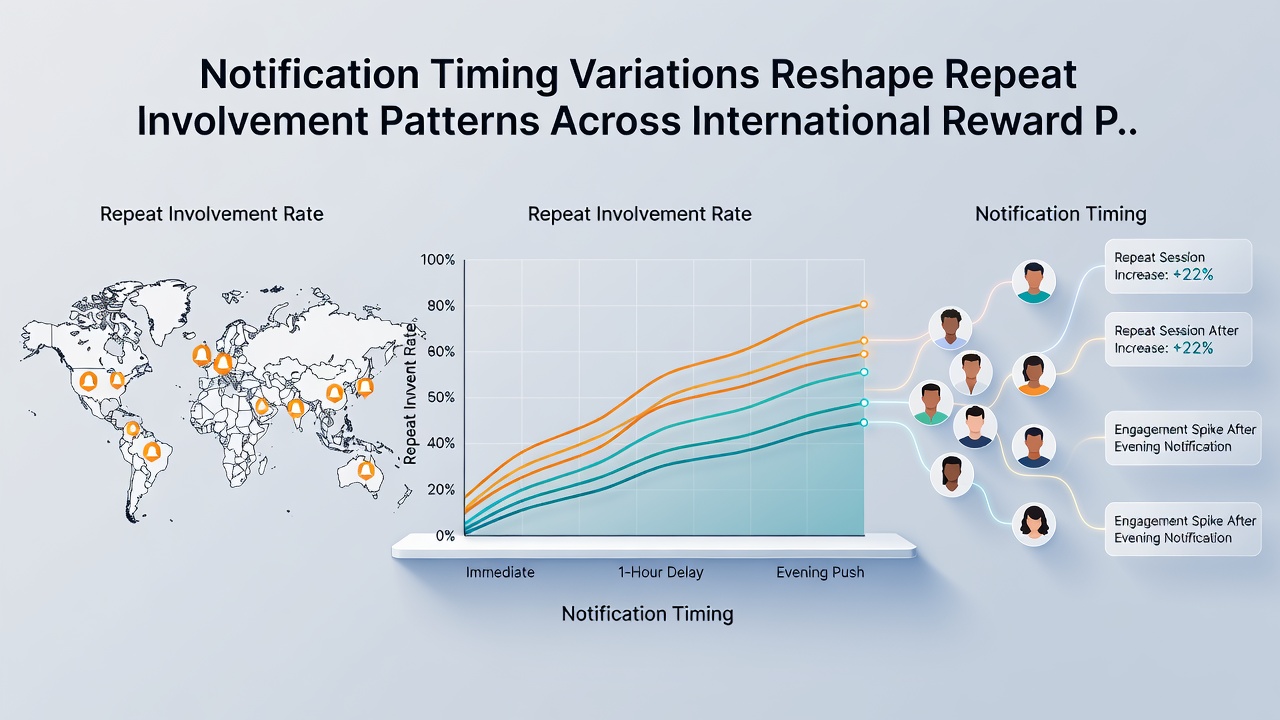
Observers tracking participation logs note that platforms sending notifications within one hour of results tend to see elevated return visits within the following 24 hours. In contrast, delays beyond six hours link to lower re-engagement on the same day, though some international users exhibit delayed returns when messages arrive during evening hours in their region. Figures from operators managing draws in North America, Europe, and Asia Pacific reveal that staggered timing across time zones can create clusters of activity where users in one area respond while others remain inactive until their local window opens.
Studies examining user cohorts indicate that repeat entry frequency rises when platforms coordinate alerts with peak mobile usage periods, such as commute times or lunch breaks. One analysis of recurring reward programs found that participants receiving confirmations during these windows completed additional entries at rates approximately 18 percent higher than those notified outside peak periods. This holds across platforms that run daily and weekly draws simultaneously.
Cross-Border Considerations
International reward platforms must navigate differing data protection rules that affect when and how they can send notifications. Regulations in the European Union require explicit consent mechanisms that sometimes extend processing times, whereas platforms serving users in Australia and Canada often operate under frameworks that permit faster delivery once initial permissions are granted. These policy differences create natural experiments where the same contest structure produces divergent repeat involvement curves depending on the jurisdiction.
Time zone management adds another layer, as a single global draw might trigger notifications at 3 a.m. for participants in one hemisphere and mid-afternoon for others. Platform analytics show that users who receive alerts during inconvenient local hours demonstrate lower immediate repeat activity, although some compensate by returning during their next active period. Operators adjusting for these factors through localized scheduling have recorded steadier participation curves across their international user bases.
Data Insights from Platform Ecosystems
Research compiled by academic teams at institutions including the University of Toronto has examined how notification cadence interacts with long-term retention in reward systems. Their work highlights that platforms experimenting with variable delays saw measurable redistribution of repeat entries, with some user segments shifting activity toward contests that announced results more predictably. Industry reports from organizations monitoring digital promotions across the Asia-Pacific region similarly note correlations between announcement speed and sustained multi-contest involvement.
Platforms preparing infrastructure updates ahead of June 2026 have begun testing hybrid timing models that combine instant alerts for high-value draws with delayed batches for smaller recurring events. Early indicators suggest these adjustments may stabilize repeat patterns by reducing notification fatigue while preserving urgency for major prizes.
Platform Policy Interactions
Changes in how platforms handle notification queues often ripple through repeat involvement metrics. When operators introduce minimum delay periods to comply with new verification standards, participation logs frequently show temporary dips in daily returns followed by recovery as users adapt to the new rhythm. Those who have studied these transitions point to consistent patterns where users in regions with stricter verification requirements exhibit slower adaptation compared with users in markets allowing quicker processing.
External factors such as device compatibility and app update cycles further modulate these effects. Users on older operating systems sometimes experience additional delays in receiving notifications, which correlates with reduced repeat activity until they update their software or switch devices. Platform teams monitoring these variables report that targeted compatibility checks sent alongside result notifications help maintain engagement levels across diverse user groups.
Conclusion
Notification timing variations continue to shape repeat involvement on international reward platforms through their influence on user response windows, regulatory compliance, and regional usage habits. Data collected across multiple markets demonstrates that both immediate and delayed approaches produce distinct participation signatures, with outcomes depending on alignment with local time zones and platform policies. As operators refine their systems through 2026 and beyond, ongoing measurement of these patterns will remain central to understanding how timing decisions affect sustained engagement worldwide.