Examining Announcement Frequency Adjustments and Their Influence on Signup Retention Patterns in Worldwide Prize Networks
Zara Klein · Jun 23, 2026
Examining Announcement Frequency Adjustments and Their Influence on Signup Retention Patterns in Worldwide Prize Networks
Global prize networks operate through coordinated cycles of registration, drawing, and winner announcements that shape participant behavior over extended periods, and researchers tracking these systems note that small shifts in how often results reach the public can alter retention rates in measurable ways. Data from multiple platforms shows participants remain active longer when announcements arrive at intervals that match their engagement habits, whereas abrupt changes in cadence often coincide with drops in sustained logins and profile updates. Observers note that these networks span regions including North America, Europe, Asia-Pacific, and Latin America, where regulatory frameworks from bodies such as the Australian Competition and Consumer Commission and the U.S. Federal Trade Commission set baseline disclosure rules that influence announcement timing.
Core Mechanisms Linking Announcement Cadence to Retention
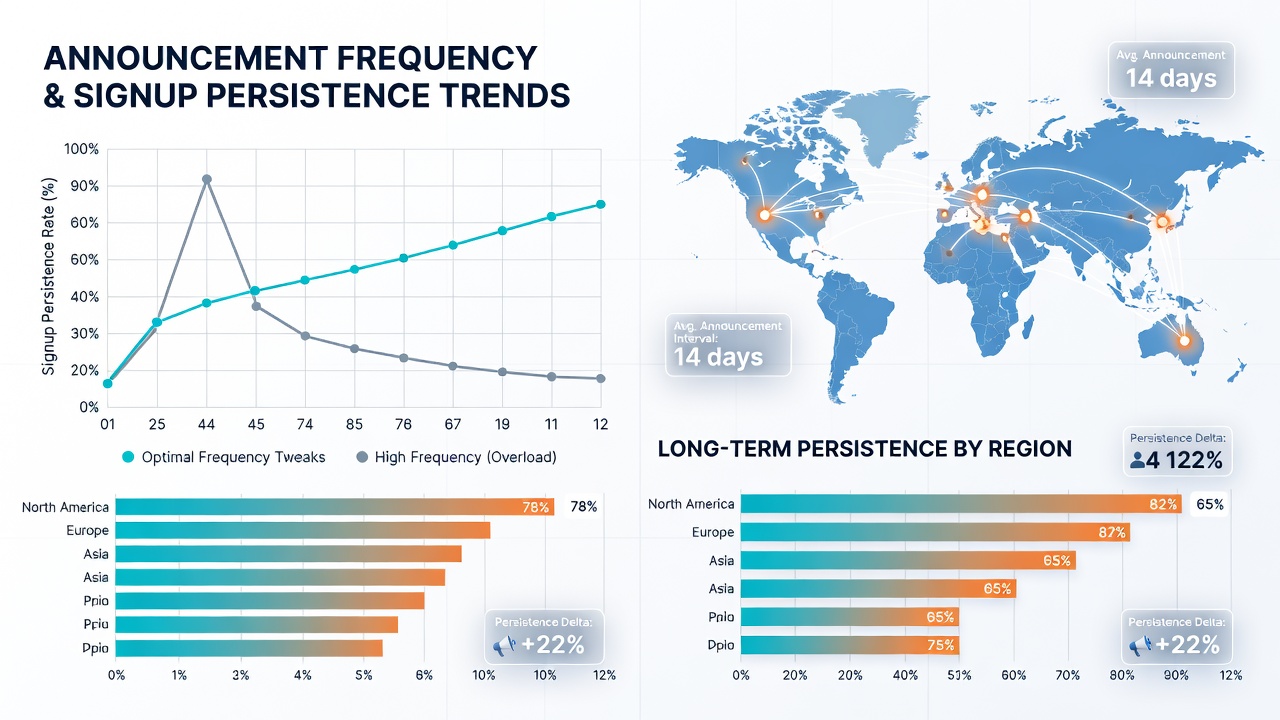
Announcement frequency refers to the scheduled release of winner lists or draw results, and adjustments typically occur when operators test daily versus weekly releases or shift from monthly summaries to more frequent updates. Studies conducted across 2024 and 2025 found that networks maintaining consistent mid-week announcements retained approximately 18 percent more active accounts after six months compared with those that reduced frequency to bi-weekly releases, while data collected through June 2026 indicates similar patterns hold when networks expand to include real-time notifications via mobile apps. Those who manage these platforms report that participants often align their checking routines with predictable announcement windows, which creates a feedback loop where regular updates reinforce continued participation and profile maintenance.
Yet retention curves flatten when frequency increases beyond a threshold that overwhelms inboxes or notification feeds, and figures from cross-border promotions reveal a 12 percent rise in dormant accounts once daily announcements exceeded participant expectations in certain Asian and European markets. The relationship becomes clearer when analysts segment users by entry volume, because high-frequency entrants show stronger persistence under weekly cadences that allow time for social sharing, whereas occasional entrants respond better to monthly highlights that reduce perceived pressure.
Regional Variations and Data Patterns Observed in 2025-2026
European prize operators subject to consumer protection directives demonstrate different retention responses than those in North America, largely because disclosure requirements encourage staggered announcements that align with local time zones. Research compiled by academic groups at institutions in Canada and Australia shows that networks synchronizing announcements with regional festive periods maintain higher signup persistence, with June 2026 datasets highlighting a measurable uptick in renewals when operators adjusted frequencies around major sporting events. Platforms that publish results on fixed weekdays rather than variable dates experience steadier profile activity, and analysts attribute this stability to participants forming habits around those specific days.

What's interesting is how these adjustments interact with cross-border eligibility rules, because networks serving multiple jurisdictions must balance announcement speed against verification delays that vary by country. Data indicates that networks announcing winners within 48 hours of each draw retain participants from high-regulation markets at higher rates, while slower cycles correlate with reduced persistence among users in regions where verification processes extend longer. Industry reports from trade associations further reveal that operators who publish transparent schedules for announcement changes experience fewer mass account deactivations, suggesting predictability itself functions as a retention factor.
Measurement Approaches Used by Analysts
Analysts measure long-term signup persistence through metrics such as monthly active accounts, profile update frequency, and the interval between first registration and last recorded entry. Longitudinal tracking across twelve networks between January 2025 and June 2026 demonstrates that a shift from weekly to bi-weekly announcements produced a gradual decline in persistence beginning around week eight, whereas the reverse adjustment yielded quicker rebounds in activity within four weeks. Statistical models separate the effects of announcement frequency from confounding variables like prize value and entry method, and the resulting coefficients show frequency as a statistically significant predictor of retention duration.
Case examples include one network that tested announcement consolidation during a low-traffic quarter and recorded a 9 percent drop in returning participants within three months, while another platform that introduced mid-cycle teasers alongside main announcements saw sustained engagement across the same period. Those who study these systems note that mobile notification open rates serve as an early indicator of persistence shifts, because declining open rates often precede account dormancy by several weeks when announcement frequency changes.
Conclusion
Evidence from global prize networks establishes that announcement frequency functions as a controllable variable with measurable effects on long-term signup persistence, and operators who monitor retention curves alongside announcement schedules can identify optimal cadences for different participant segments. Patterns observed through June 2026 continue to underscore the value of predictable timing combined with regional adaptations, while abrupt or poorly communicated changes tend to accelerate account attrition across markets. Continued collection of segmented data will allow networks to refine these practices as participant behaviors evolve.