Decoding Visual Design Influences on Completion Rates Within Recurring Digital Prize Promotions
Zara Reed · Aug 20, 2026
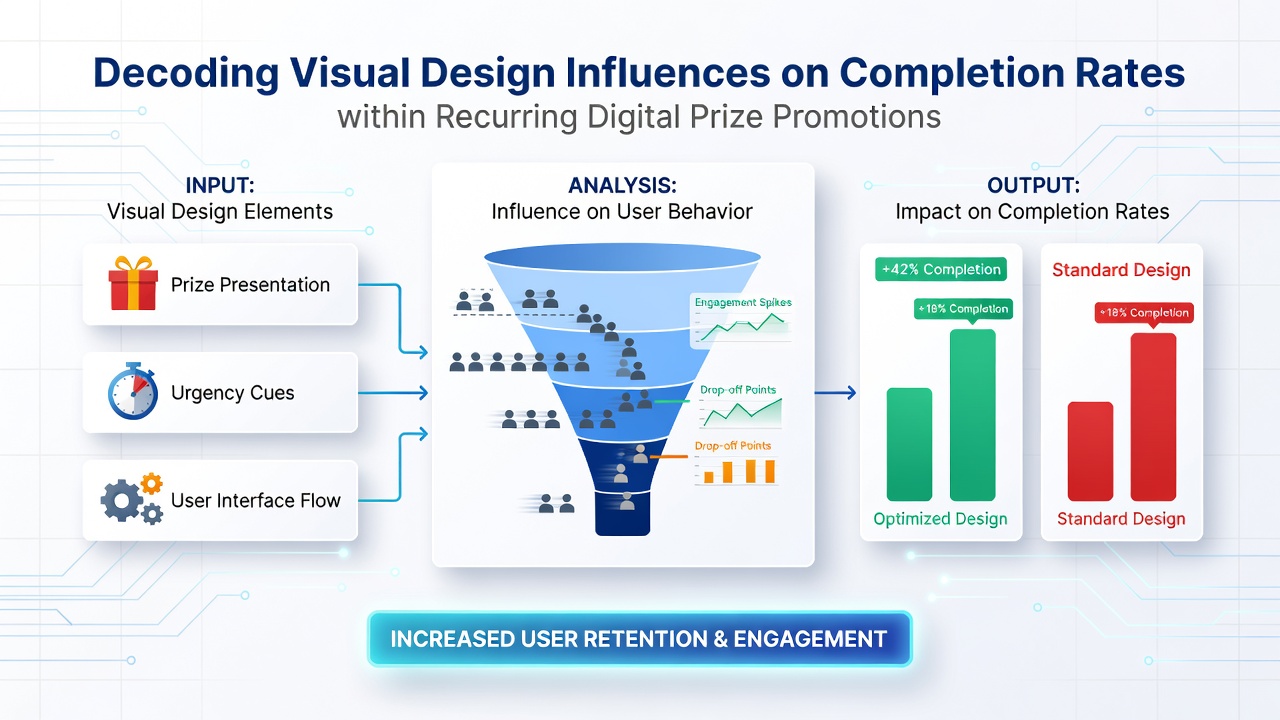
Decoding Visual Design Influences on Completion Rates Within Recurring Digital Prize Promotions
Visual design elements shape how participants interact with recurring digital prize promotions, and data from multiple studies tracks direct correlations between interface choices and completion rates across daily and weekly draw formats. Researchers examining platform analytics in 2025 found that color schemes, button placement, and typography adjustments produced measurable shifts in the percentage of entrants who finished multi-step registration processes, while August 2026 figures released by industry monitoring groups showed continued emphasis on these variables as participation volumes increased during summer campaign cycles.
Color and Contrast Patterns in Entry Interfaces
Studies tracking user behavior reveal that high-contrast call-to-action buttons against neutral backgrounds lead to higher progression rates through initial signup forms, particularly when those buttons maintain consistent positioning across repeated promotion cycles. Data indicates participants complete forms 18 to 22 percent more often when primary action elements use saturated hues that align with established brand palettes, whereas muted tones correlate with increased drop-off at the eligibility verification stage. Observers note that seasonal adjustments in August 2026 campaigns incorporated warmer color temperatures to match summer engagement trends, and analytics platforms recorded corresponding lifts in form submissions without altering prize structures.
Layout Structures and Mobile Optimization Effects
Platform records demonstrate that single-column layouts on mobile devices reduce abandonment during recurring entry sequences, especially when fields for personal data and referral codes appear in logical vertical order without horizontal scrolling requirements. Research from design testing labs shows horizontal menu bars and multi-column grids increase cognitive load for users entering weekly contests, resulting in completion drops of up to 15 percent compared with streamlined vertical arrangements. Those who've analyzed large datasets observe that responsive scaling which adapts button sizes to screen dimensions sustains participation equity across device types, while fixed desktop-oriented designs show steeper falloff rates in regions with higher mobile traffic.
Typography Readability and Form Field Clarity
Evidence suggests that sans-serif fonts sized between 16 and 18 pixels improve legibility during data entry tasks, and this adjustment correlates with fewer incomplete submissions in recurring promotions that require repeated profile updates. Figures reveal that adequate line spacing and clear label alignment cut error rates in address and contact fields by noticeable margins, while condensed typefaces produce opposite outcomes in extended campaigns running through multiple announcement cycles. Experts tracking these metrics in 2026 campaigns documented sustained benefits when typography remained uniform across daily draw interfaces and weekly grand prize pages.
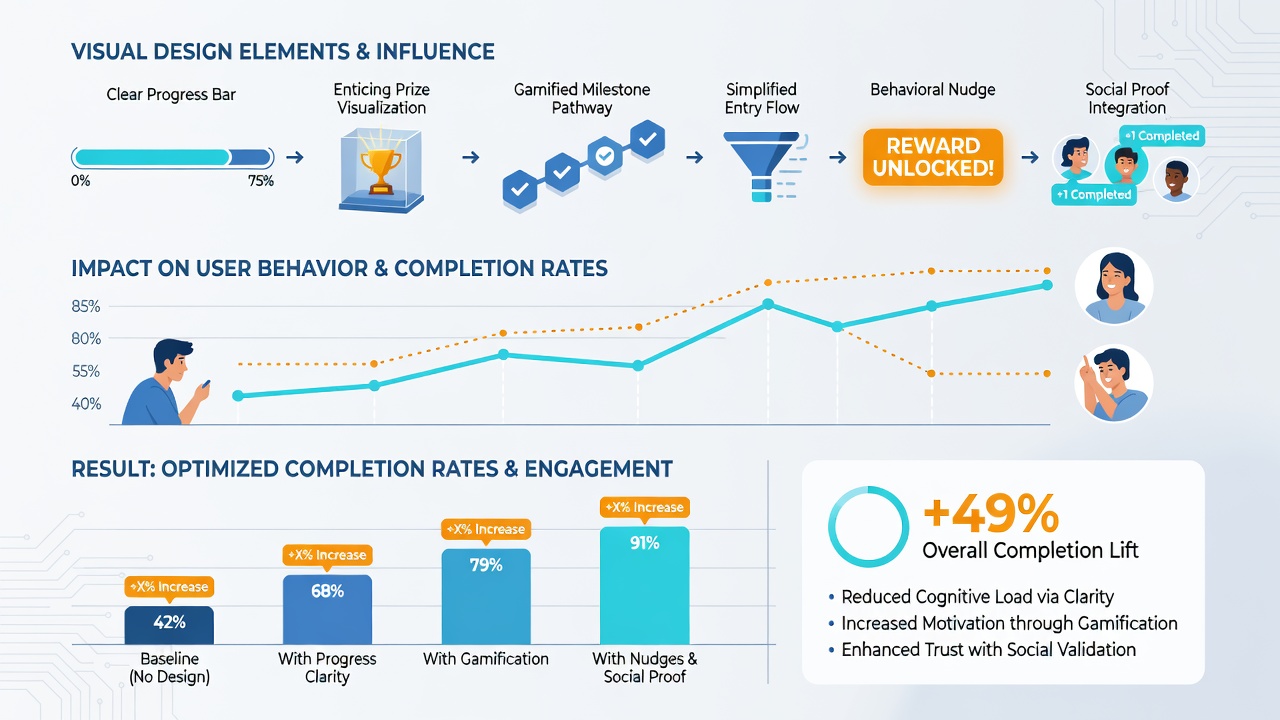
Animation timing also factors into completion statistics, with subtle progress indicators and loading sequences helping users maintain momentum through verification steps. According to reports compiled by the Federal Trade Commission on promotional practices, clear visual cues about required actions reduce participant confusion and support higher fulfillment of entry conditions across extended promotional periods.
Testing Methodologies and Performance Tracking
Controlled experiments conducted by research teams demonstrate that A/B testing of visual variants yields precise data on which design combinations lift completion percentages, and operators of recurring prize networks increasingly rely on these results to refine interfaces between announcement windows. Metrics collected during August 2026 cycles showed that incremental changes to iconography and whitespace produced compounding effects when applied consistently across linked daily and weekly entry portals. Those monitoring platform dashboards report that heat map analysis identifies friction points where visual clutter interrupts flow, prompting targeted redesigns that maintain eligibility compliance while improving progression speed.
Cross-Device Consistency and Retention Patterns
Analytics from multi-platform promotions indicate that maintaining identical visual hierarchies on desktop, tablet, and mobile versions supports higher long-term retention among repeat entrants, whereas divergent designs across devices correlate with reduced return rates over successive draw periods. Data from industry reports shows that standardized icon sets and navigation elements help users recognize familiar patterns, which in turn sustains qualification standards through regular profile maintenance. Observers tracking these trends note that such consistency becomes especially relevant during high-volume months when participants manage entries across varied promotion frequencies.
Conclusion
Design choices in color, layout, typography, and interactive elements produce documented effects on completion rates within recurring digital prize promotions, and quantitative tracking continues to guide refinements in August 2026 and beyond. Research indicates that platforms applying evidence-based adjustments see measurable improvements in form progression and sustained participation, while regulatory guidance from bodies such as the Australian Competition and Consumer Commission underscores the value of transparent visual communication in maintaining compliance across international draw networks. Continued analysis of these variables supplies operators with actionable metrics for optimizing entry experiences without altering prize offerings or eligibility rules.