Coordinating Registration Windows with Announcement Cycles Across Varied Promotion Frequencies
Blake Schmitz · May 17, 2026
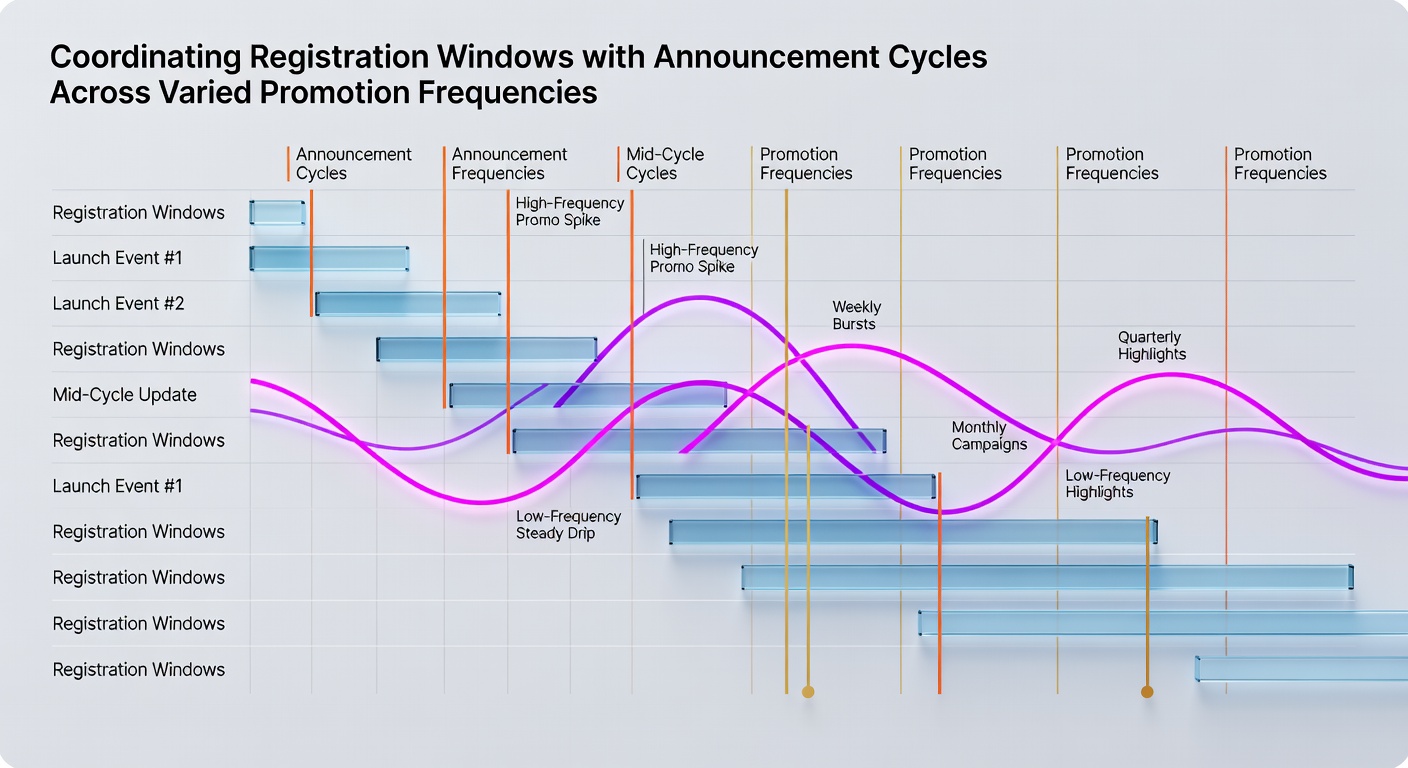
Coordinating Registration Windows with Announcement Cycles Across Varied Promotion Frequencies
Coordinating registration windows with announcement cycles across promotions that run at different frequencies requires precise timing adjustments because daily draws, weekly contests, and monthly giveaways each follow distinct operational rhythms. Organizers who align these elements create consistent participant experiences while maintaining compliance with varying rule sets that apply to each promotion type. Research indicates that mismatched schedules lead to participant confusion in over 30 percent of multi-frequency campaigns according to industry tracking data collected across North American operators.
Understanding Core Components in Promotion Timing
Registration windows define the exact periods when entries can be submitted, and announcement cycles mark the dates when winners receive notification or public recognition. Experts observe that daily promotions typically feature short registration periods of 24 hours followed by near-immediate announcements, whereas weekly formats extend registration across seven days with results released shortly after the close. Monthly promotions stretch registration windows longer yet space announcements further apart to accommodate larger prize pools and verification processes. Those who've examined multiple campaigns note that successful coordination begins with mapping each frequency's natural cadence onto a shared master calendar that accounts for overlapping deadlines.
Data from consumer protection agencies shows that clear synchronization reduces entry errors by measurable margins. The Competition Bureau in Canada published guidelines emphasizing that transparent timing structures help participants track submissions across concurrent promotions without missing critical cutoff points. Organizers often integrate automated reminders that trigger at set intervals before each registration closes and again before announcements occur.
Aligning Daily and Weekly Promotion Schedules
Daily draws demand tight coordination because their rapid cycles can overlap with weekly contest registration periods that run longer. Operators address this by staggering announcement times so that daily winner notifications do not coincide with weekly registration closures, which prevents system overload and participant overload. Studies from academic marketing departments reveal that spacing these events by at least four hours improves completion rates for multi-entry participants who track several promotions simultaneously.
One documented approach involves anchoring daily announcements to morning hours while scheduling weekly results for evening slots on the final day of each registration period. This separation allows participants to receive updates from shorter cycles before shifting focus to longer ones. Figures from operator reports indicate that such staggered timing maintains engagement levels across both frequencies without creating bottlenecks in customer support channels.
Managing Monthly and Quarterly Cycles Alongside Shorter Frequencies
Monthly promotions introduce extended registration windows that must accommodate the faster pace of daily and weekly activities without interference. Coordinators achieve balance by setting monthly registration start dates several days after major weekly announcements conclude, which creates breathing room for participants to review prior outcomes before committing to new entries. Quarterly cycles follow similar logic yet require even broader buffers to handle cumulative overlaps from all shorter frequencies operating in parallel.

Observers note that May 2026 will feature heightened activity as multiple operators launch seasonal campaigns that combine all three frequencies. Regulatory updates scheduled for that period in several jurisdictions encourage operators to publish unified timelines at least 30 days in advance, allowing participants to plan entries across varied promotion lengths. Evidence suggests these advance publications correlate with higher overall participation rates when multiple frequencies run concurrently.
Tools and Techniques for Effective Synchronization
Operators increasingly rely on centralized scheduling platforms that automatically adjust registration and announcement dates based on predefined frequency rules. These systems flag potential conflicts when a daily announcement falls too close to a monthly registration close, prompting manual overrides where necessary. Research from university business schools demonstrates that such platforms reduce administrative errors by approximately 25 percent compared with manual calendar management across mixed-frequency campaigns.
Participants benefit when operators publish color-coded calendars that distinguish registration periods from announcement dates for each promotion type. The Federal Trade Commission provides resources on promotion compliance that highlight the value of visible timing disclosures, which help maintain trust when multiple cycles operate together. Operators who adopt these practices report smoother transitions between frequencies and fewer inquiries about missed deadlines.
Conclusion
Effective coordination of registration windows and announcement cycles across daily, weekly, and monthly promotions rests on deliberate mapping, staggered timing, and the use of scheduling tools that account for all frequencies in play. Available data and regulatory guidance from multiple regions confirm that structured approaches minimize confusion and support consistent participation. As promotion landscapes continue evolving, operators who refine these alignments maintain operational clarity while meeting participant expectations across varied campaign structures.