Behavioral Adaptations in Response to Evolving Verification Standards Across Global Contest Platforms
Parker Flores · Aug 13, 2026

Behavioral Adaptations in Response to Evolving Verification Standards Across Global Contest Platforms
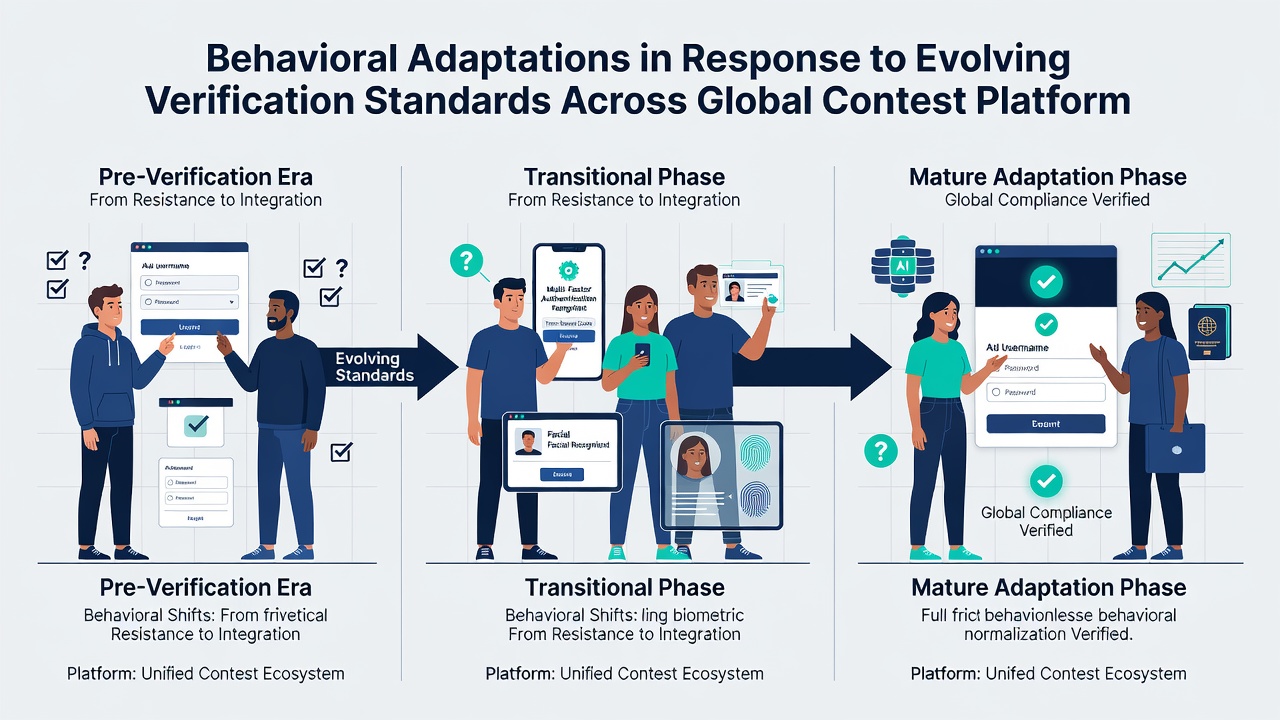
Contest platforms worldwide continue to adjust their verification protocols in response to regulatory shifts and technological advances, and participants respond by modifying how they manage entries, maintain profiles, and handle documentation across multiple regions. Data from industry reports shows that these changes affect entry patterns particularly when platforms introduce new identity checks or location confirmations that require real-time validation rather than static submissions.
Shifts in Identity Verification Practices
Platforms now integrate biometric options alongside traditional document uploads in many jurisdictions, and this development prompts entrants to prepare digital copies of passports or driver's licenses well in advance of submission deadlines. Researchers at various academic institutions have documented increased use of secure cloud storage among frequent participants who track multiple promotions simultaneously because these systems allow quick access during time-sensitive verification windows.
August 2026 marks the rollout of enhanced cross-border data sharing agreements in several Asia-Pacific markets, and observers note that participants there have begun consolidating their personal records into single verified accounts to streamline repeated checks. Such adaptations reduce the likelihood of delays when platforms cross-reference information against government databases maintained by agencies like the Australian Competition and Consumer Commission.
Location and Eligibility Adjustments
Global contest networks enforce stricter geolocation requirements through IP analysis combined with address verification, and this combination leads many users to update residential details immediately upon relocation rather than waiting for annual reviews. Studies from Canadian research groups indicate that participants who synchronize profile updates with seasonal moves maintain higher success rates in qualifying for international draws compared to those who delay these steps.
Entry habits evolve further when platforms require proof of residency via utility bills or bank statements within narrow timeframes, and people often set calendar reminders to gather these materials during routine financial reviews. What's interesting is how these routines spread across communities where shared experiences with past disqualifications encourage collective sharing of best practices through forums and group discussions.
Profile Maintenance and Data Synchronization
Regular profile audits become standard practice as verification standards tighten around data accuracy, and this habit correlates with sustained access according to longitudinal tracking by European research networks. Participants coordinate their updates with announcement cycles because platforms increasingly flag outdated entries during automated scans that occur before winner selections.
Those who monitor regulatory announcements from bodies such as the European Commission adjust their strategies ahead of policy implementations, and this proactive approach minimizes interruptions in multi-platform participation. Figures from academic analyses reveal that synchronized data management across devices also rises when contest rules specify compatibility with certain authentication apps or browsers.
Cross-Platform Participation Patterns
Entrants diversify their activity across regional sites to hedge against localized verification changes, and this distribution appears in usage statistics compiled by trade associations in North America. Behavioral responses include creating dedicated email folders for verification codes and linking them to password managers that handle frequent resets required by updated security layers.
Platforms introduce tiered verification levels based on prize value, and participants respond by prioritizing higher-effort submissions for major events while using quicker methods for smaller recurring draws. Research indicates these tiered approaches encourage selective engagement rather than uniform activity across all available promotions.
Conclusion
Verification standards continue to evolve across global contest platforms, and the resulting behavioral adaptations reflect practical responses to new documentation demands, timing constraints, and technological integrations. Participants who align their routines with these shifts sustain eligibility more consistently, while data from varied regulatory and academic sources underscores the measurable impact on entry volumes and qualification outcomes in different markets.