Algorithmic Shifts in Search Visibility and Their Effect on Discovering Recurring Giveaway Events
Blake Schmitz · Jul 26, 2026

Algorithmic Shifts in Search Visibility and Their Effect on Discovering Recurring Giveaway Events
Search engines refine their ranking systems on a regular basis, and those adjustments alter how users locate sites that list recurring giveaway events such as daily draws and weekly prize promotions. Observers note that updates to core algorithms often prioritize content quality signals, user engagement metrics, and technical performance factors, which in turn influence the positions of directories and aggregators that compile entry opportunities across multiple promoters.
Core Algorithm Updates and Visibility Patterns
Google and other major platforms release core updates several times each year, and data from search analytics firms shows that sites focused on recurring promotions experience ranking fluctuations when those changes emphasize expertise, authoritativeness, and trustworthiness. Researchers at academic institutions have documented how pages that maintain consistent update schedules and clear disclosure practices retain higher visibility compared with those that rely on thin or duplicated listings. In July 2026, additional refinements to indexing protocols are expected to place greater weight on structured data markup that identifies promotion frequency and eligibility rules, according to industry reports circulated among digital marketing analysts.
Those who track visibility trends find that recurring giveaway listings face unique challenges because their content repeats across daily or weekly cycles. Algorithmic systems evaluate freshness signals alongside historical performance, which means directories that refresh entry details promptly tend to maintain steadier placement in results pages. Figures from web traffic studies indicate that drops in organic reach often coincide with broader updates that devalue repetitive or low-value content clusters.
User Discovery Pathways and Behavioral Shifts
People searching for ongoing prize opportunities typically enter queries that combine terms such as daily sweepstakes or weekly giveaways with specific prize categories. When visibility changes occur, click-through rates on aggregator pages shift, and users migrate toward platforms that surface more rapidly in localized or personalized results. Evidence from consumer behavior reports compiled by regulatory bodies in multiple jurisdictions reveals that searchers in North America and the European Union adjust their query patterns within weeks of major algorithm adjustments.
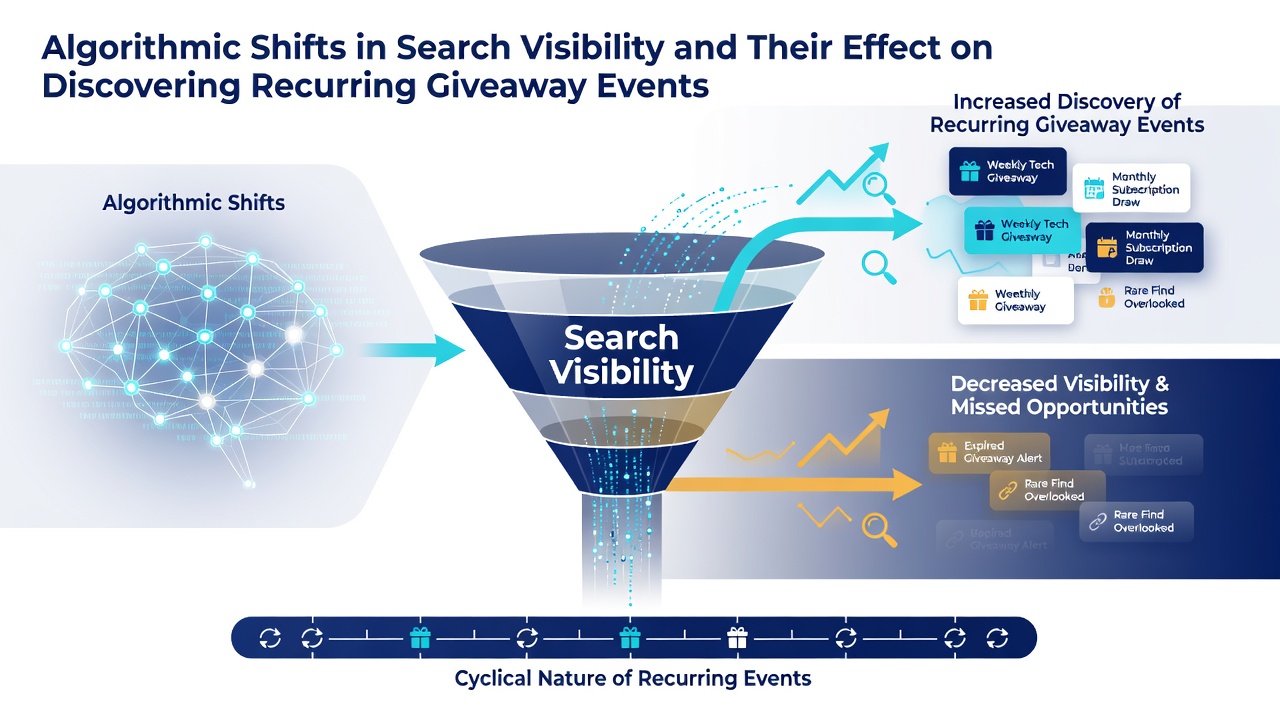
Platform operators respond by strengthening mobile rendering speeds and implementing schema markup that highlights recurring event schedules. Those modifications help maintain presence in featured snippets and knowledge panels that many users consult before navigating to entry pages. Data collected by trade associations in Australia and Canada demonstrates that sites adopting these technical practices experience smaller visibility losses during subsequent updates.
Regional Regulatory Influences on Content Presentation
Government agencies such as the Federal Trade Commission in the United States and the Australian Competition and Consumer Commission publish guidelines that require clear disclosure of promotion terms and entry limitations. Search algorithms incorporate compliance signals into ranking decisions, which means directories that embed accurate eligibility information and prize descriptions often receive preferential treatment in results for region-specific queries. Studies conducted by research groups in the European Union further indicate that pages aligned with these transparency standards sustain longer-term indexing stability.
Cross-border participants encounter additional complexity when eligibility rules differ by jurisdiction. Aggregators that segment listings according to geographic criteria benefit from algorithmic preferences for localized relevance, and traffic patterns reflect this segmentation after each major update cycle. Industry organizations tracking digital promotion ecosystems report that such segmentation reduces bounce rates and improves dwell time metrics that feed into ranking formulas.
Technical Adaptations and Long-Term Visibility
Site administrators implement server-side rendering improvements and structured data enhancements to align with evolving crawl priorities. These adjustments address both speed and semantic clarity, factors that algorithms weigh heavily when evaluating pages containing time-sensitive recurring events. Observers tracking performance data note that directories incorporating these changes recover visibility more quickly following updates that target low-quality content.
Analytics platforms supply granular reports on impression share and average position, allowing operators to correlate specific algorithm shifts with changes in referral traffic from search results. Patterns emerging from these reports show that consistent maintenance of entry calendars and rule documentation correlates with steadier performance across multiple update cycles.
Conclusion
Algorithmic refinements continue to reshape the pathways through which users identify recurring giveaway events, and platforms that adapt their content structures and technical foundations maintain more consistent visibility. Regulatory guidance from agencies across different regions further shapes presentation standards that influence how search systems evaluate and rank promotional directories. Those monitoring these developments track both technical metrics and compliance factors to understand ongoing shifts in discovery patterns.